We used to build prisons to house criminals. Today, we create or design criminals to fill prisons.
The Pains of Adjustment
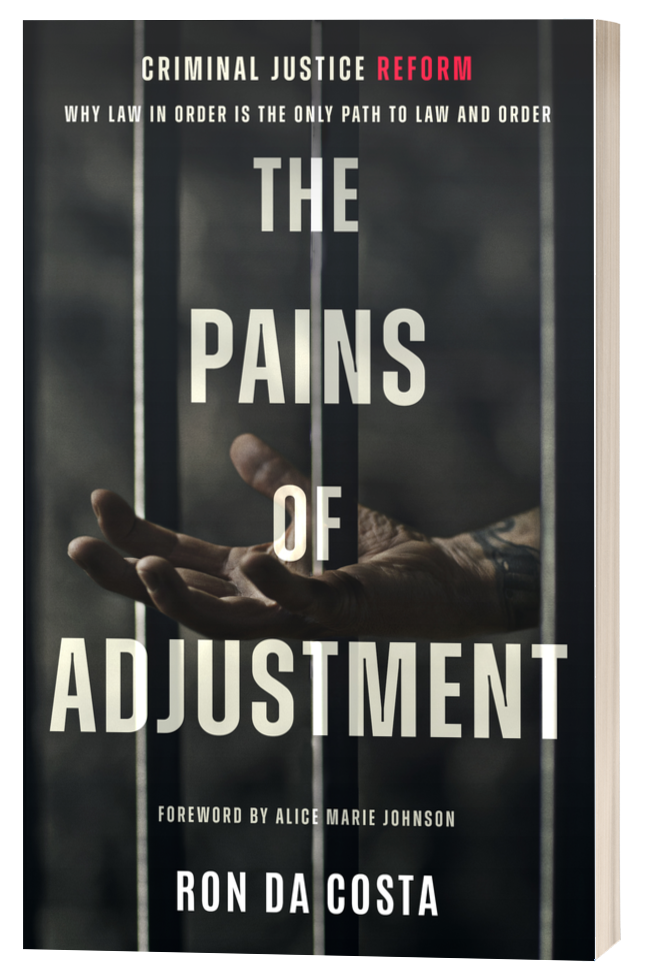
Criminal justice reform is inevitable, yet society remains passive, often complacent, clinging to outdated notions of punishment and prisons. In “The Pains of Adjustment”, Ron Da Costa boldly challenges these perceptions, advocating not merely for reform, but for informed transformation of the criminal justice system.
Da Costa draws upon deep insights to urge readers to reconsider incarceration’s true purpose beyond emotional retaliation or societal disdain. He argues for a nuanced understanding of incarceration—prisons must evolve into environments that foster genuine behavioral alterations, rather than reinforcing cycles of crime and recidivism.
“Justice cannot discriminate based on race, culture, religion or INK.”
Rooted in rigorous analysis and compelling real-world examples, this book reveals the critical need to humanize criminal justice reform by giving it an authentic face rather than a superficial façade. Da Costa emphasizes a strategic, thoughtful approach, shifting the conversation from reactive punishment to proactive improvement and genuine rehabilitation.
“The Pains of Adjustment” argues that: It is inconceivable that incarceration or imprisonment does not come with some form of reassurance that justice has been achieved for victims and their families and that deserving perpetrators who undergo penance are allowed the opportunity to restore some type of conducive position in society.